Does Owning a Private Community on Skool Truly Help a Solopreneur Escape the Control of TikTok and Instagram Algorithms?
I. Introduction & Context 2025-2026
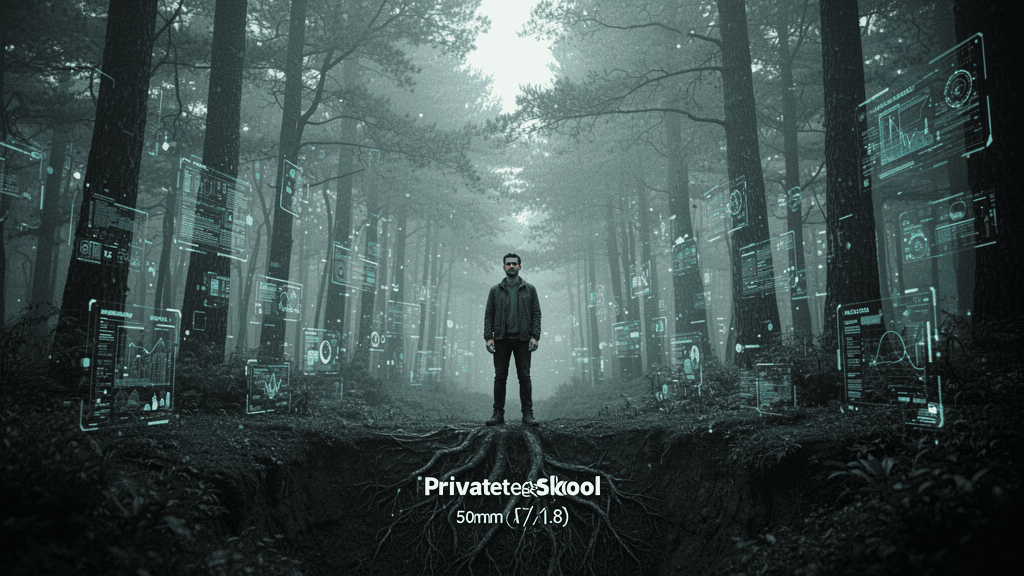
By 2025, the Social Media Marketing landscape had completely transformed from just two years prior. Algorithms on TikTok and Instagram no longer primarily favored viral content. Instead, they shifted toward optimizing user on-platform time through AI-generated content and sponsored materials. Solopreneur creators began feeling increasingly exhausted.
You could produce a video reaching millions of views, yet see a significantly low conversion rate into quality leads. The algorithm’s “generosity” in distributing free content had come to an end. Cost Per Acquisition (CPA) skyrocketed. This triggered a strategic question: How can one own a customer acquisition channel without “renting” it from big tech platforms?
The concept of Owned Media became the hottest buzzword. Among solutions, Skool emerged as the leading Community-first Platform. Many experts proclaimed it a “lifeline.” But is reality as simple as the theory? This article dissects the issue from first principles.
Key Takeaway: Algorithms aren’t the enemy. They are a paid distribution tool. You pay either with high-quality content or advertising dollars. A private community is your way to “own” that distribution channel.
II. Root-Cause Analysis (Applying First Principles)
1. How Social Media Algorithms Really Work
To answer the question about Skool, we must understand the problem’s essence. Platforms like TikTok and Instagram operate on an Attention Economy business model. Their ultimate goal isn’t helping you sell—it’s keeping users in the app as long as possible.
Machine-learning algorithms analyze user behavior and prioritize content that triggers immediate engagement. This traps creators in the Content Hamster Wheel—you must constantly produce new content. Stop posting, and Organic Reach plummets.
Expert Insight: You don’t own viewer data on TikTok. You’re only “borrowing” their attention momentarily. When the platform changes policy, your assets vanish.
2. The Nature of a Private Community
In contrast, a private community on Skool operates under Permission Marketing. Users proactively join and grant you permission to reach them. This relationship isn’t dictated by random video recommendation algorithms.
The business model here is based on Retention and LTV (Lifetime Value). You focus on a smaller, highly engaged group. This marks a shift from Quantity to Quality.
3. Analyzing “Escape”
This is the critical point. Does building on Skool truly help you escape algorithmic control? The answer is both Yes and No—it depends on how you define “escape.”
If “escape” means no longer depending on TikTok’s organic traffic, then not entirely. You still need TikTok to initially pull people into your community. But if “escape” means freedom from algorithmic influence over engagement and revenue, then the answer is Yes.
In a private community, 100% of members see your content. No algorithm filters your posts from their view. This is the key difference in Reach Consistency.
Key Takeaway: You can’t completely sever ties with Social Media. But you can shift from an “absolutely dependent” relationship to a “distribution partnership.” A private community is where you preserve real assets.
III. Detailed Execution Strategy
1. Building a Conversion Funnel from Social Media to Skool
You can’t build a community from zero. You need a Traffic Source. TikTok and Instagram serve as the top of the funnel. Your task is to design a Magnetic Content Strategy.
Content on TikTok should not aim to sell directly. It should function as Content Marketing, solving specific problems. At the end of each post, replace “follow for more” with a Call to Action (CTA) inviting viewers to join the community for deeper value.
Execution Strategy:
- Step 1: Identify the core problem of your Ideal Customer Profile (ICP).
- Step 2: Create Problem-Agitate-Solution content on TikTok.
- Step 3: CTA leading to a Landing Page for Skool community sign-up.
- Step 4: Leverage Bio Link and Story Link on Instagram to capture traffic.
Expert Insight: Don’t try to sell your course directly on TikTok. Sell community access first. Build trust within the private space, then introduce high-value offers. Your conversion rate will be much higher.
2. Building Community Culture on Skool
Skool provides the tools, but tools alone don’t build engagement. You need Community Architecture. A dead community is one where the owner posts occasionally and disappears.
Design Engagement Loops. Create habits for members: Monday for goal-sharing, Wednesday for live Q&A, Friday for celebrating wins.
Use Skool’s Gamification features. Point systems and levels encourage participation. Users feel motivated to engage to level up, which fuels User Generated Content (UGC)—members create content for each other.
Execution Strategy:
- Set up Classrooms with short course content.
- Create Groups based on topics or skill levels.
- Host regular Live Sessions to boost real-time interaction.
- Appoint Community Champions from your most active members.
3. Optimizing the Solopreneur Business Model
A one-person business has limited time. You can’t do everything. A Skool community helps automate customer support.
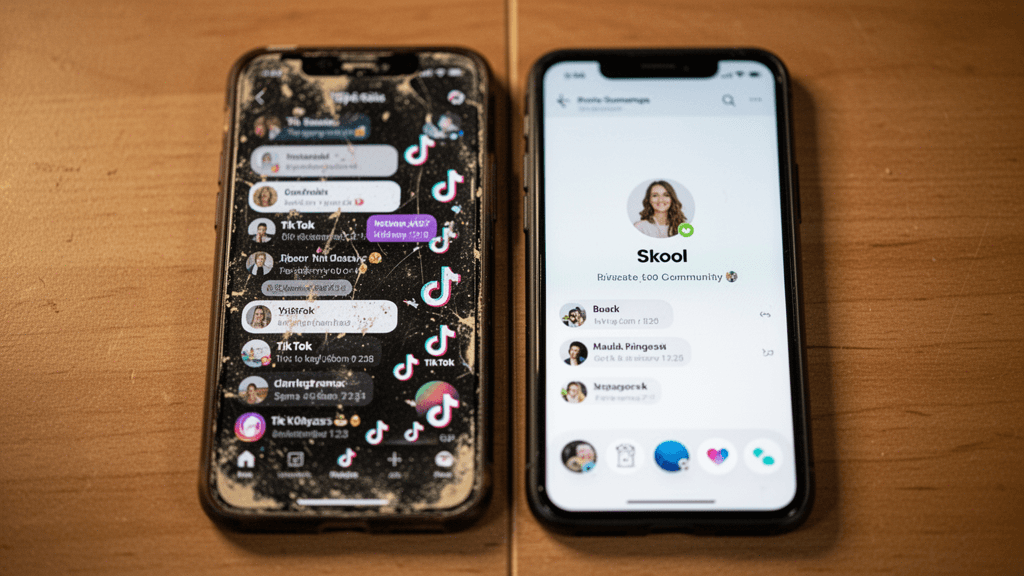
When the community thrives, existing members answer new members’ questions—Peer-to-Peer Support. You free up time for strategy and product development.
The business model also shifts. Instead of one-off product sales, you offer Membership Subscriptions, generating Recurring Revenue. This is far more stable than algorithm-dependent sporadic sales.
Expert Insight: Skool charges a member fee. Ensure Unit Economics are profitable. Your membership price must cover platform fees and deliver real value. Avoid pricing too low just to grow membership numbers.
4. Leveraging Automation to Manage the Community
A Solopreneur can’t be online 24/7. You need Automation Tools. Use Zapier or Make to integrate Skool with other platforms.
When a new member joins, automatically send a welcome email, invite them to a Discord group, or share resource links. When members reach milestone points, automatically unlock advanced content.
Execution Strategy:
- Integrate Skool with Email Marketing Platforms like ConvertKit.
- Create Drip Campaigns for automated lead nurturing.
- Set alerts for new posts needing approval.
- Automate welcoming new members via bot comments.
5. Measuring and Optimizing Performance
No measurement, no improvement. Track Key Performance Indicators (KPIs). Unlike social media’s focus on views and likes, communities prioritize Engagement Rate and Retention Rate.
Skool provides analytics dashboards. Identify your most active and silent members—and apply appropriate activation strategies.
Expert Insight: Churn Rate (dropout rate) is the most critical metric. A high churn indicates insufficient value. Interview leaving members to understand why.
IV. Comparison & Effectiveness Evaluation (10-Point Scorecard)
Table 1: Owned Media vs Rented Media Comparison
| Criteria | TikTok/Instagram (Rented Media) | Skool Community (Owned Media) |
|---|---|---|
| Data Ownership | Platform owns data; risk of account suspension | Full ownership of member lists and contact info |
| Reach | Large but unstable; algorithm-dependent | Smaller but consistent; 100% reach, no algorithm filters |
| Distribution Cost | Low if viral, high with ads | Platform fee; no distribution cost |
| Conversion Rate | Low (1-2%), broad untargeted audience | High (10-20%), targeted and pre-qualified audience |
| Revenue Model | One-time product sales; unpredictable | Subscriptions; predictable income |
| Ease of Setup | Easy to start; hard to sustain consistently | Hard to launch (needs traffic); easier to maintain once active |
| Depth of Interaction | Low; surface-level comments, no discussion | High; in-depth discussions, relationship-building |
Table 2: Skool Effectiveness Scorecard for Solopreneurs
| Criteria | Score | Notes |
|---|---|---|
| Customer Data Control | 9 | You own email and contact details; immune to platform policy changes |
| Revenue Stability | 8 | Subscription model enables predictable income, reducing volatility |
| Operational Cost | 7 | Skool charges per member; pricing must be optimized for profit |
| Initial Investment | 5 | Requires significant effort to build core content and initial culture |
| Scalability | 6 | Larger communities need complex moderation and management systems |
| Organic Reach | 4 | No recommendation algorithm; hard to grow without external traffic |
| Interaction Quality | 9 | Niche environment fosters high-quality discussions |
| Platform Independence | 7 | Still dependent on Social Media for traffic; not fully independent |
Overall Assessment:
Total Score: 55/80
By standard grading:
- 1-4: Low - Not recommended
- 5-8: Fair - Consider with optimization
- 9-10: Excellent - Top priority
With a total of 55/80 (average 6.9/10 per criterion), this strategy falls into the Fair category. This confirms Skool is effective—but not a magic bullet. It demands serious investment and structured strategy. Solopreneurs must understand the real goal: controlling data and revenue, not rapid traffic growth.
V. Future Trends & Conclusion
2026 Trends: The Rise of Micro-Communities
In 2026, users grow increasingly fatigued by noisy content. They seek authentic connections. Micro-Communities of 100–500 members will become more valuable than 10,000-member groups with shallow engagement.
Platforms like Skool will enhance features with deeper AI Assistant integration for administrators. AI will auto-summarize discussions, suggest content, and flag at-risk members.
Additionally, Hybrid Models will dominate. Solopreneurs will use TikTok to attract, Skool to retain, and Email to sell. These three pillars form a sustainable business system.
Conclusion
Returning to the original question: “Does owning a private community on Skool truly help a solopreneur escape TikTok and Instagram’s algorithmic control?”
The answer is Yes, partially. Skool frees you from algorithmic control over content distribution and data ownership. You’re no longer enslaved to going viral daily to stay relevant. You build real assets: a list of loyal customers.
However, you can’t completely sever ties with Social Media. TikTok and Instagram remain top tools for acquiring new customers. Rather than seeing them as enemies, treat them as distribution partners. Use them to drive traffic, and Skool to retain value.
Expert Insight: Don’t build a community because it’s trendy. Build it because you have a mission to connect people. A soulless community dies faster than a TikTok account with zero views.
Take Action Now: Re-evaluate your business model. Determine your revenue ratio between new and existing customers. If you’re overly reliant on new customers, it’s time to consider building a private community.
Related Posts

Why the Paid Challenge Model in 5-21 Days Has Become the Optimal Strategy for Solo Creators to Turn Expertise into Ongoing Revenue?

Automation vs. Authenticity: Analyzing the Strategy for Maintaining Authentic Interactions in the AI Era

Breaking Down Subscription Business: From Creator Economy to Super-Community

Building the Endless Video Machine: Dominating Multi-platform Automation Strategy in 2026

How a Single Individual Can Build Passive Income of $5,000–$50,000 Per Month by Combining Paid Communities and Paid Challenges