The Evolution of Social Commerce in 2026 and How It Is Changing the Way Users Discover and Purchase Products
I. Introduction & Context 2025-2026
We are no longer in the era where users scroll through Newsfeeds to see what their friends are eating. By 2026, Social Commerce has evolved from a mere feature of social media platforms into a dominant commercial infrastructure.
The current landscape is shaped by the saturation of traditional display advertising. Users, especially Gen Z and Gen Alpha, have developed “ad blindness.” They are not searching for products purely on Google Search; they are seeking experiences and validation on platforms like TikTok, Instagram Reels, or YouTube Shorts.
Key Takeaways: In 2026, the primary product discovery channel (Discovery Channel) has shifted from Search Intent (active search) to Discovery Intent (passive but highly personalized discovery powered by AI).
Notably, Generative AI has been directly integrated into user flows. Consumers are not just reading reviews; they interact with the seller’s AI Avatar, try products through AR (Augmented Reality) directly in the comment section, and complete seamless payments without leaving the app. This is the “Shoppertainment” (Shopping Entertainment) 2.0 revolution.
II. Root Cause Analysis (Applying First Principles)
To understand why the old model is dying and the new one is emerging, let’s apply First Principles thinking. Break down all assumptions and examine the fundamental elements that drive social shopping behavior.
1. The Collapse of the Old Trust Mechanism (Traditional Social Proof)
Previously, we trusted “likes” and “comments.” However, the proliferation of bot farms and engagement groups has falsified these metrics. Traditional Social Proof has lost its value. The new source of truth is shifting to trust in content authenticity and verified peer-to-peer connections. Blockchain technology for verifying video origin (Content Credentials) is becoming the standard.
2. Friction in User Experience
According to the rule, the more steps involved, the lower the conversion rate. The old model: Watch video -> Click link in bio -> Switch to Web/E-commerce site -> Search for product again -> Checkout. This process creates too many points of leakage. The principle of 2026 is Zero-Friction Commerce. Purchases must occur at the point of interaction (In-Stream Checkout). Even a one-second delay in loading the checkout page can result in lost customers.
3. Changes in Distribution Algorithms
Algorithms in 2024-2025 were heavily based on Engagement (interaction rates). However, by 2026, algorithms have shifted to optimizing for Conversion Value (conversion value). Platforms no longer care how long you watch a video; they care about your potential to make a purchase. Behavioral data is combined with psychographic data to predict needs before users even realize them.
4. The Rise of AI Agents as Buyers
This is a “tectonic” change. Users are increasingly hiring AI Agents (virtual assistants) to filter information and make purchases on their behalf. Instead of displaying ads to humans, Marketers in 2026 must optimize content for AI Agents to read, understand, and recommend products to their owners. SEO in Social Commerce now means writing for AI to read.
III. Detailed Implementation Strategy
To succeed in 2026, businesses cannot just focus on content (“beautification”). A tight technical and operational strategy is required. Below is the implementation roadmap.
1. Building a “Content-Commerce Convergence” Architecture
Users do not clearly distinguish between viewing content and shopping. Your system should reflect this integration.
Step 1: Integrate Shop Front-end Directly into Social Profiles. Do not use external links. Use the APIs of platforms (TikTok Shop API, Instagram Shopping API) to embed the entire product catalog directly below videos or livestreams.
Expert Note: Do not try to drive users out of the app to collect data. Accept a loss in data ownership in exchange for a higher conversion rate. Platform data is much richer than the data you can store yourself.
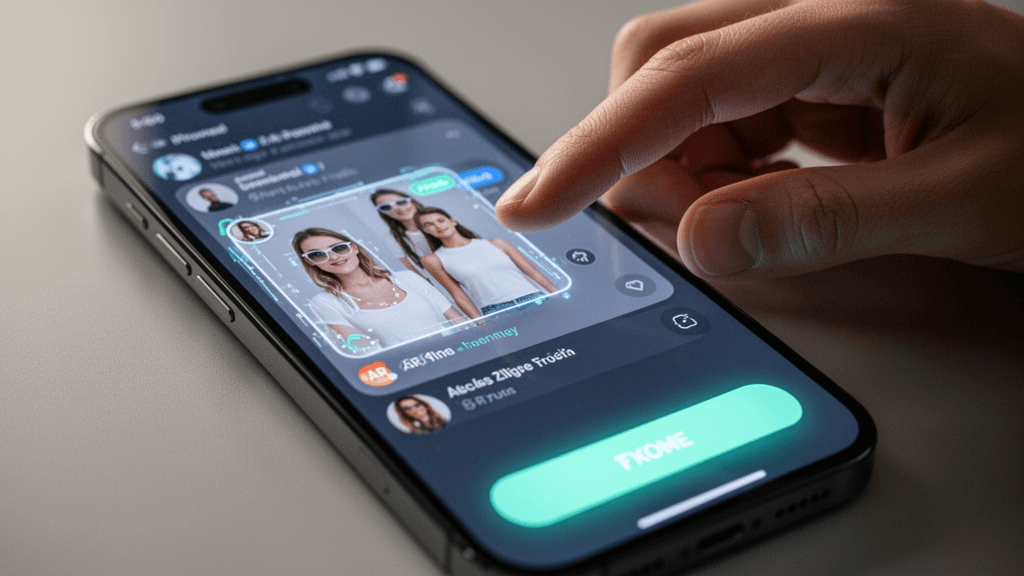
Step 2: Implement Automatic Shoppable Video Tags. Use Computer Vision to automatically recognize products in videos and tag them for purchase.
- If someone is wearing a jacket in the video, the system automatically recognizes and tags that jacket in the frame.
- Users can click on the product directly in the frame -> Pop-up with product info -> Click to buy.
Implementation Strategy: Adopt a video production process that is “Shoppable-First.” Scripts should include close-ups of products for at least three seconds to facilitate AI recognition. The editing team should be trained to overlay dynamic CTA (Call to Action) buttons that follow the video timeline.
2. Optimizing for Live Commerce 2.0 (AI-Driven Livestreams)
Livestreaming remains king, but the host does not have to be a human.
Step 1: Deploy 24/7 AI Avatar Hosts. By 2026, the cost of hiring KOC/KOL for livestreams is too high for 24/7 coverage. The solution is to use AI Avatars trained on the voice and gestures of top salespeople.
- The AI Avatar can answer customer questions in real-time (real-time) via the chatbox by connecting to the company’s LLM (Large Language Model).
- The AI can demo virtual products (3D Rendering) directly on the livestream.
Step 2: Gamification in Livestreams. Integrate mini-games directly into the livestream room.
- Users participate in games to earn flash sale vouchers.
- The algorithm randomly drops vouchers based on viewer hesitation (they watch for a long time without buying -> drop vouchers to encourage purchase).
Expert Note: AI Avatars are not perfect. Set up an “Escalation” (hierarchy) scenario. When the AI cannot handle complex situations, it should seamlessly hand over to a human representative without the customer noticing the transition.
3. Community as a Service (CaaS) Strategy
Traditional customer service teams (CSKH) are cost and speed barriers. By 2026, you need to build a self-sustaining community.
Step 1: Build a Private Tribe (Closed Group). Move users from public (open fan pages) to private (closed Zalo/FB/Telegram groups). Here, you can use Seeding Automation. Bots will automatically post user-generated content (UGC) reviews from public to private to stimulate discussions and the bandwagon effect.
Step 2: Programmatic Advocacy. Create an automated reward system for users when they promote products within their social circles.
- Use Smart Contracts or real-time affiliate systems.
- When User A shares a link and User B makes a purchase, User A’s wallet receives reward points immediately.
Implementation Strategy: Do not manage groups like a police force. Instead, act as a “context creator.” Generate weekly discussion topics to encourage community-generated content. Use Sentiment Analysis to automatically filter out negative comments before they spread.
4. Data Strategy: The Single Source of Truth
Dispersed data is the enemy. You need a CDP (Customer Data Platform) that unifies your data.
Connect Offline and Online Data. If you have a physical store, use a POS system connected to your online CRM. When customers make offline purchases, scan a QR code to join the online community -> they get tagged as VIP -> their Social Feed will display premium products the next time they shop.
Use Predictive Analytics for Targeting. Instead of targeting based on demographics like “Female, 25-30,” target based on Predictive Behavior.
- Target the group: “Users who have watched 3 acne review videos but have not purchased an acne treatment product in the last 24 hours.”
IV. Comparison and Effectiveness Evaluation Table
To help you visualize the differences between the old and new models, see the following analysis table.
Table 1: Comparison of Social Commerce Solutions (Old Model vs. 2026 Model)
| Criteria | Social Commerce 1.0 (2022-2024) | Social Commerce 2.0 (2026) |
|---|---|---|
| Touchpoints | Link-out to Website/Landing Page | In-App Checkout (Native Checkout) |
| Primary Content Type | Static images, Pre-existing short videos | Shoppable Video, AI Livestreams, AR Filters |
| Personalization | Basic click history-based | Hyper-personalization based on Real-time Intent & AI Prediction |
| Interaction | One-way (Brand -> User) | Multi-way (User <-> AI Agent <-> Community) |
| Operating Time | Office hours, KOL schedule | 24/7 (Autopilot with AI Automation) |
| Authenticity | Based on UGC (easily faked) | Verified Content Credentials (Blockchain/NFT watermark) |
Table 2: Scorecard for Evaluating the Implementation of Social Commerce 2026 Strategy
This table helps you score your current business capabilities. The rating scale is from 1 to 10.
| Criteria | Score | Notes |
|---|---|---|
| Native Checkout Integration (API) | 4 | Not deeply connected to APIs, still using bio links |
| Quality of Customer Data (CDP) | 7 | Have a CRM but not yet unifying online-offline data |
| AI Content Creation Capability (GenAI) | 9 | Content team already uses AI tools daily |
| Speed of Social Care Responses | 3 | Still dependent on staff, slow responses |
| Automated Affiliate System | 6 | Running but not real-time tracking |
| Maturity of Livestream Process | 5 | Manual, no AI Avatars yet |
| AVERAGE SCORE | 5.6 | Good |
Overall Score Evaluation:
- 1 - 4 points (Low): Your business is at high risk. Immediate transformation is needed to avoid elimination by competitors using automation.
- 5 - 8 points (Good): You have a solid foundation but lack finesse in AI integration and real-time experience optimization. Focus on reducing friction in the purchase process.
- 9 - 10 points (Excellent): You are a market leader. Highly automated systems, maximizing data and AI to increase profitability.
For the example above, the average score is 5.6 (Good). The business needs to focus on improving response speed and integrating native checkout immediately.
V. Future Trend Forecast & Conclusion
Looking beyond 2026, Social Commerce will no longer be a separate sales channel. It will blend into the concept of Ubiquitous Commerce.
1. Social Search Will Replace Traditional SEO
Gen Alpha users will search for everything on TikTok/YouTube rather than Google. If your product does not appear in the first video review, you do not exist. Video SEO (optimizing thumbnails, transcripts, captions) will be more important than backlinks.
2. Decentralized Commerce and Tokenization
Community ownership will be tokenized. Users holding brand tokens will have voting rights for new products and receive deep discounts. The line between “Customer” and “Shareholder” will blur.
3. AR/VR Shopping Integration
Instead of watching models wear clothes, you will use your camera to “try” products on yourself directly in the Social Feed. This technology is ready; it just awaits more widespread adoption of hardware.
Conclusion
The evolution of social commerce in 2026 is not just a change in the platform or where you post. It is a revolution in mindset: from “Selling to the Crowd” to “Personalized Service by Machines in a Social Environment.”
The winner is not the one with the best content, but the one with the best Workflow (process) automation to deliver the right product to the right person at the right time with near-zero latency.
Start by auditing your entire social purchase funnel. Every button click and second of waiting time is lost money. This is the pragmatic mindset for 2026.
Related Posts

Why the Paid Challenge Model in 5-21 Days Has Become the Optimal Strategy for Solo Creators to Turn Expertise into Ongoing Revenue?

Automation vs. Authenticity: Analyzing the Strategy for Maintaining Authentic Interactions in the AI Era

Breaking Down Subscription Business: From Creator Economy to Super-Community

Building the Endless Video Machine: Dominating Multi-platform Automation Strategy in 2026
How a Single Individual Can Build Passive Income of $5,000–$50,000 Per Month by Combining Paid Communities and Paid Challenges