Your Personal Data Is Being Sold - How to Take Back Control

Your Personal Data Is Being Sold - How to Take Back Control
Author: Vinh Automation
Content type: Trend Introduction
Audience: Beginner
Reading time: 10 minutes
The Internet Has Changed - And Nobody Told You
A Short Story
You just bought a new vacuum cleaner on Amazon from a third-party seller. Three days later, your phone rings with an unknown number: “Hello sir, this is from the vacuum maintenance service…” A week later, spam calls start flooding in - “loan approval”, “real estate investment”, “health insurance” - 5 to 10 calls a day.
Sound familiar?
You are not alone. This is a global problem, and it gets worse every year.
The Big Picture: Where Is Your Data?
In the US: Over 4,000 data broker companies operate legally. They collect, buy, and trade your personal information: name, phone number, email, home address, purchase history, even medical and religious data. Whitepages, Spokeo, MyLife, PeopleFinders - these are just a few of the hundreds of sites that publicly list your information.
A 2025 Pew Research survey found that 81% of Americans feel they have no control over their own data. The consequences: spam calls, scams, and identity theft are daily nightmares.
In Europe: GDPR (General Data Protection Regulation) arrived in 2018, hailed as a “steel shield” for privacy rights. In theory, you have the right to request companies delete your data (Right to Erasure). In practice, every company has its own process, its own form, and processing takes 30-60 days. Imagine doing this for 200 websites - that is 200 emails, 200 forms, 200 waiting periods.
In Asia: From Japan (APPI), South Korea (PIPA), to Singapore (PDPA) - Asian countries are gradually building data protection frameworks. But the underground data market in Asia is even more brutal. Spam calls and scam messages are everyday occurrences.

Thousands of data brokers worldwide are storing and trading your personal information - from the US, Europe to Asia
It Goes Beyond Spam Calls
Spam calls and junk emails are just the tip of the iceberg. Your data on data brokers can also be used for:
- Social engineering attacks: Scammers call pretending to be your bank, knowing your full name, address, and tax ID.
- Doxxing: Personal information made public, leading to online or real-world harassment.
- Identity theft: Opening bank accounts, taking out loans in your name.
- Stalking: Your home address and phone number exposed, endangering you and your family.
Three Ways to Remove Your Personal Data - From Manual to Automated
There are three levels of tackling this problem. Each takes more time but delivers deeper results.
Method 1: Manual Removal (Free - But Extremely Time-Consuming)
You can request data brokers to delete your information yourself. Here is the process:
Step 1: Identify the list of data brokers There are roughly 150-200 popular data broker sites in the US. Major ones: Whitepages, Spokeo, MyLife, PeopleFinders, Intelius, BeenVerified, TruthFinder, ZabaSearch, Classmates, PeekYou.
Step 2: Visit each site, find the Opt-Out section Every site has a different process. Some have a clear “Opt Out” button, others require you to email them with ID documents, and some hide the opt-out in a complex menu.
Step 3: Fill out identity verification forms Most require you to provide more information to prove who you are: email, phone number, address - exactly the things you want to remove. Ironically, this is how they “verify” you.
Step 4: Wait for confirmation (and usually redo it) After submitting, you wait 1-4 weeks. Some sites will delete your data, others “forget” and your information reappears after a few months.
Method 2: How to Stop Spam Calls - A Practical Guide
The first and most important step: remove your phone number from data brokers. Spam calls do not happen by chance - they originate from your phone number being listed on broker databases.
Register for the National Do Not Call Registry (US): Visit donotcall.gov and register your phone number. This is a basic step but NOT enough - it only stops legitimate companies from calling, not data brokers or scammers.
Block calls one by one:
- iPhone: Settings > Phone > Silence Unknown Callers
- Android: Phone app > Settings > Block numbers > Unknown
- But this only blocks - it doesn’t remove your number from spam lists.
Send opt-out emails to each data broker: Each site has its own email for data removal requests. For example, to remove yourself from Whitepages:
- Find your profile on whitepages.com
- Copy the profile URL
- Visit whitepages.com/suppression_requests
- Fill in the form, submit, confirm via email
- Wait 48 hours
And you still have 149 more sites to do the same for.
Method 3: How to Remove Your Phone Number from Google
Google is the largest search engine - if your data is anywhere on the web, Google will find it. To manually remove your personal info from Google:
Step 1: Search for yourself
Type "Full Name" + "Phone Number" or "Full Name" + "Address" into Google. Note down all the URLs that display your information.
Step 2: Request removal from each source site (before going to Google) Google does not delete data at the source - it only removes it from search results. You must ask the source site (data broker) to delete it first, then Google has grounds to remove it from their cache.
Step 3: Use Google Removal Request After the data has been deleted from the source site, visit Google Remove Outdated Content and submit a request. Google will review and remove it from search results within a few days.
Automated Tools - The Future of Data Protection
After reading the section above, you have two choices:
- Spend 25-75 hours manually removing yourself from each site, and repeat every 3-6 months.
- Use an automated tool to do it for you.
This is exactly why the Data Removal Service industry was born and has exploded in the last 3 years. In the US and Europe, this has become an essential service - like health insurance for your digital data.
Data Removal Service Comparison
| Service | Data brokers covered | Speed | Price | Strengths | Weaknesses |
|---|---|---|---|---|---|
| DeleteMe | ~30-40 sites | Slow (batched) | $10.75/month | Most established, trusted | Expensive, fewer sites |
| Incogni (Surfshark) | ~180 sites | Medium | $6.49/month | Wide coverage, strong marketing | Tied to Surfshark ecosystem |
| Kanary | ~150 sites | Medium | $6.99/month | Nice UI, good tracking | Newer, fewer reviews |
| MyDataRemoval | ~200+ sites | Fast | $6.49/month | Widest coverage, competitive price | Newest on the market |
MyDataRemoval is the newest name in this group, but it has a clear advantage: it scans and removes from over 200 data brokers - more than any competitor at the same price point.
Why Data Removal Services Are the Future
Reason #1: Laws are tightening, but enforcement is weak GDPR in Europe, CPRA in California, new laws in India and Brazil - all recognize your right to have data deleted. But enforcement still depends on you taking action. Automated tools bridge the gap between legislation and reality.
Reason #2: The number of data brokers is growing exponentially AI makes it easier than ever to collect and aggregate personal data. Every year, hundreds of new data brokers appear. Manual removal is a battle you cannot win.
Reason #3: The cost is far lower than potential damage A few dollars a month for a data removal service is far cheaper than a single identity theft incident (average loss of $1,200 per person in the US, not counting time and mental toll).
Reason #4: User awareness is rising Documentaries like “The Social Dilemma”, “The Great Hack”, and major data breaches (Equifax, Facebook-Cambridge Analytica) have woken up users worldwide. More people than ever are willing to pay to protect their data.
How MyDataRemoval Works
These services follow a simple process:
- You sign up and provide basic info (name, email, phone number, address).
- The system automatically scans hundreds of data brokers for your data.
- For each site found, the system automatically sends an opt-out request on your behalf.
- The system monitors status and re-sends requests if your data reappears.
- You receive periodic reports on how many data brokers have been removed.
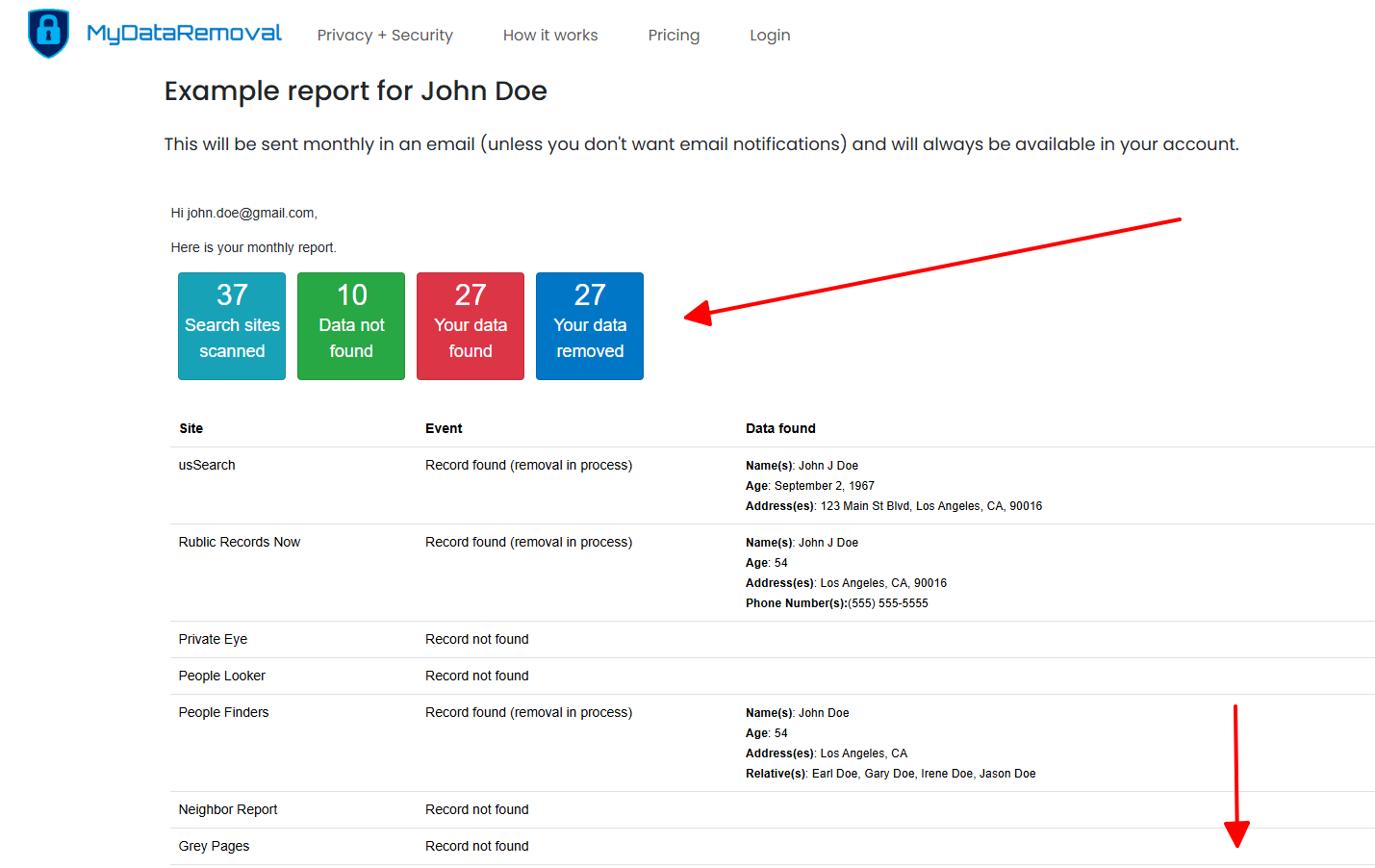
Automated process: scan, detect, and request data removal from data brokers - repeated periodically to ensure data does not reappear
When NOT to use a data removal service
- If you have absolutely no digital footprint on the internet (very rare).
- If you only care about spam emails - a strong email filter (like ProtonMail) may be sufficient.
- If you live in a country with no active data brokers (very few, but they exist).
The Battle for Privacy Has Only Just Begun
Spam calls, junk emails, data brokers - these are not problems that will disappear on their own. As the world becomes more digital, your personal data becomes more valuable - and more hunted.
Three things you can do RIGHT NOW:
- Search for yourself on Google - type your name + phone number, see how many sites display your information.
- Choose a method - manual removal (free but time-consuming) or an automated tool.
- Be proactive about new data - think twice before giving your phone number or email to any website.
The world is moving toward privacy protection - Apple with App Tracking Transparency, Google with Privacy Sandbox, Europe with GDPR. But nobody can protect your data better than you.